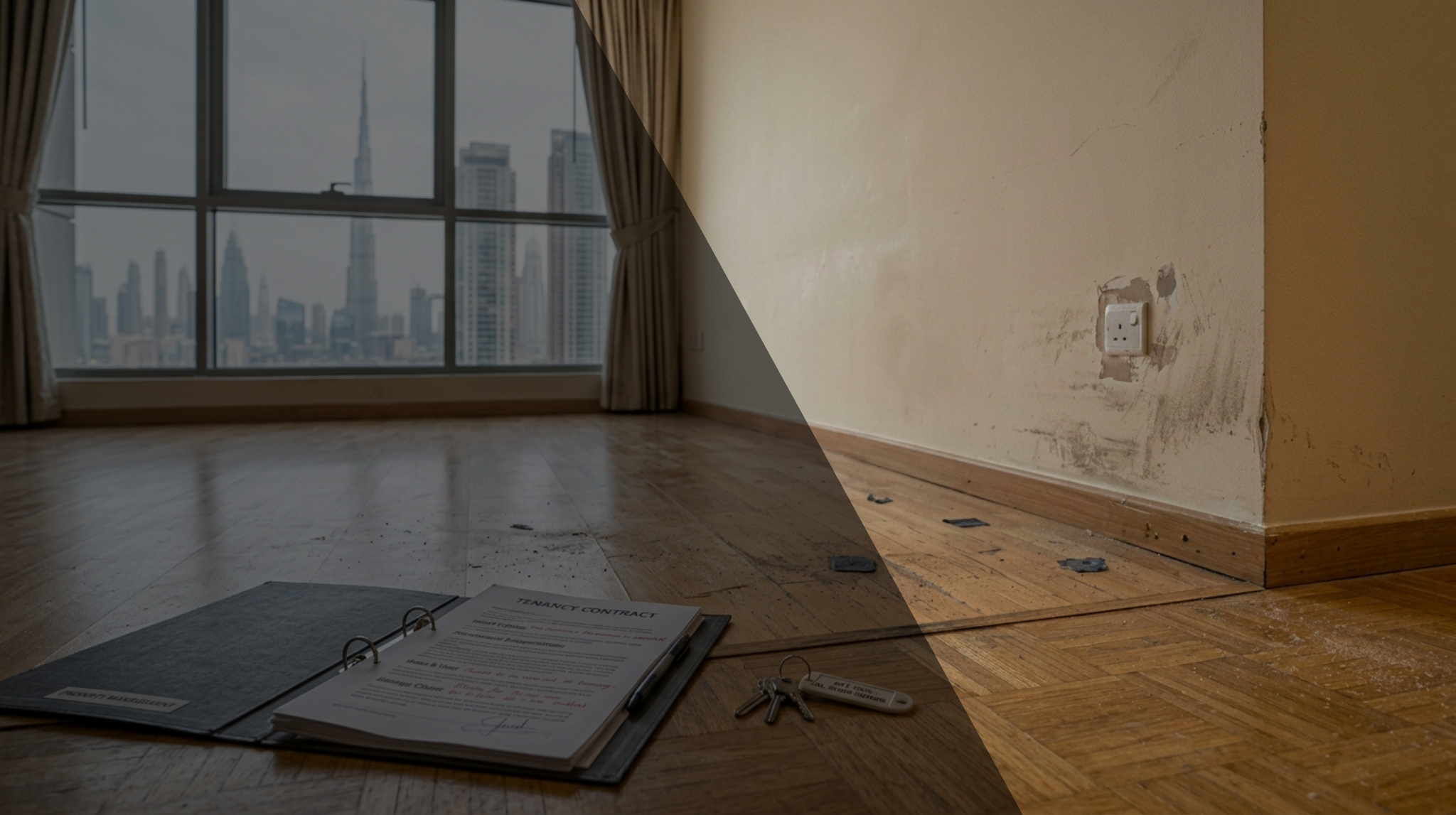
Damage to a rented apartment can quickly become a source of disagreement between landlords and tenants. Questions may arise over who is responsible for repairs, whether the tenant must pay for the damage, and what happens to the security deposit at the end of the tenancy.
Under UAE tenancy principles, responsibility generally depends on the nature and cause of the damage, the terms of the tenancy contract, and the applicable laws and regulations in the relevant Emirate.
Understanding these responsibilities can help both landlords and tenants avoid unnecessary disputes.
1. Who Is Responsible for Apartment Damage?
Responsibility for damage generally depends on whether the damage resulted from ordinary use, normal deterioration, negligence, misuse, or another cause.
A tenant is generally expected to take reasonable care of the rented property and return it in the condition required under the tenancy agreement, subject to normal wear and tear.
The landlord, on the other hand, may remain responsible for repairs and maintenance that are not caused by the tenant and that fall within the landlord's legal or contractual obligations.
The specific circumstances should therefore be reviewed before determining who must pay.
2. What Is Normal Wear and Tear?
Not every form of deterioration in an apartment can be considered tenant damage.
Normal wear and tear may include deterioration that naturally occurs through ordinary use of the property over time. Examples may include minor fading, ordinary aging of fixtures, or reasonable deterioration caused by normal occupancy.
Damage resulting from negligence, misuse, or intentional acts may be treated differently.
Whether a particular issue constitutes normal wear and tear will depend on the condition of the property, the circumstances, and the evidence available.
3. When Can the Tenant Be Required to Pay?
A tenant may be responsible where damage was caused by the tenant, members of the household, guests, or other persons for whom the tenant may be responsible, particularly where the damage resulted from negligence, misuse, or improper use of the property.
Examples may include significant damage to doors, walls, flooring, fixtures, or other parts of the apartment caused through improper use.
However, a landlord should not automatically treat every repair as the tenant's financial responsibility. The cause of the damage and the tenant's contractual obligations should be considered.
4. What Repairs Are Normally the Landlord's Responsibility?
Landlords may have obligations relating to maintaining the property in a condition suitable for its intended use, subject to the tenancy contract and applicable law.
Major maintenance issues, structural problems, and defects that are not caused by the tenant may generally fall within the landlord's responsibilities.
The tenancy agreement should be carefully reviewed because it may contain specific provisions dealing with maintenance, repairs, and minor expenses.
5. Can the Landlord Deduct Damage Costs From the Security Deposit?
Security deposits are commonly collected by landlords as protection against certain obligations arising under the tenancy.
If a tenant causes damage for which the tenant is legally or contractually responsible, the landlord may have grounds to seek recovery of the reasonable cost of repairing that damage, subject to the applicable tenancy rules and the terms of the agreement.
A disagreement may arise where the landlord deducts an amount that the tenant believes is excessive or relates to normal wear and tear.
In such circumstances, the tenant may request supporting documents, repair estimates, invoices, photographs, or other evidence showing the basis of the deduction.
6. What Evidence Should Landlords and Tenants Keep?
Evidence can be extremely important when resolving an apartment damage dispute.
Both parties should consider keeping:
• Photographs or videos of the property before and after the tenancy.
• The signed tenancy agreement.
• Move-in and move-out inspection records.
• Communications concerning reported damage or repairs.
• Maintenance requests and repair records.
• Invoices, quotations, or receipts for repair work.
• Evidence relating to the payment and return of the security deposit.
Having clear documentation can help establish the condition of the property and determine whether the damage was caused by ordinary use or by the tenant.
7. What Happens If the Landlord and Tenant Disagree?
If the parties cannot agree on responsibility for the damage or the amount to be paid, the dispute may need to be addressed through the competent rental dispute resolution authority or court, depending on the Emirate and circumstances.
The relevant authority may consider the tenancy agreement, evidence of the property's condition, communications between the parties, repair documents, and other relevant information.
Neither the landlord nor the tenant should assume that simply making a demand or refusing payment automatically resolves the dispute.
Key Takeaway
Responsibility for apartment damage in the UAE is not determined solely by who occupies or owns the property.
The key considerations may include the cause of the damage, whether it constitutes normal wear and tear, the terms of the tenancy agreement, the applicable tenancy regulations, and the evidence available.
Landlords and tenants should document the condition of the property and keep records of repairs and communications throughout the tenancy.
Conclusion
Apartment damage disputes can become complicated when landlords and tenants have different views about who should pay for repairs or whether deductions from the security deposit are justified.
If you are facing a dispute concerning property damage, repair costs, or the return of a security deposit, reviewing the tenancy agreement and available evidence can help clarify your legal position.