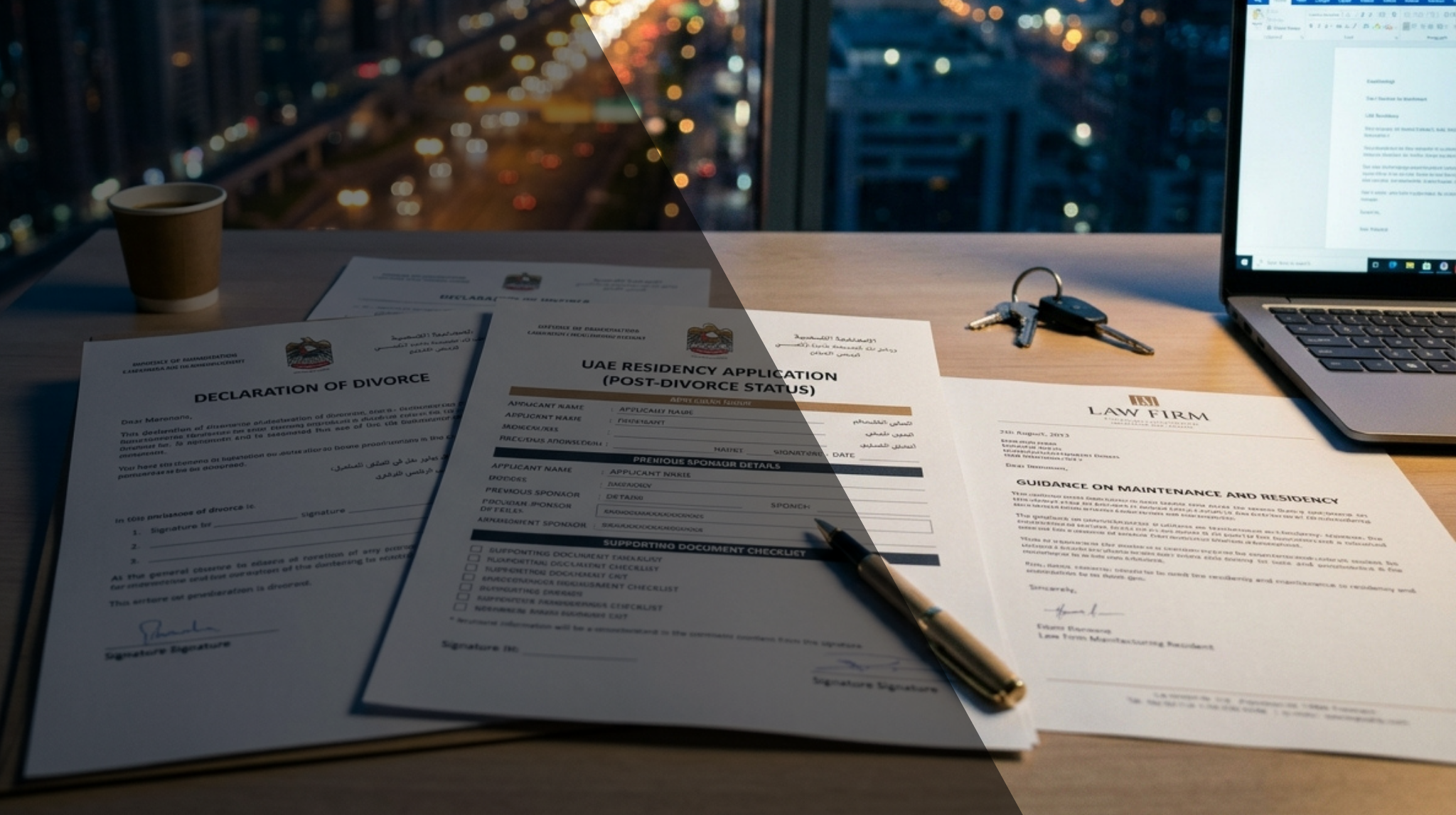
Divorce can involve more than the legal separation of spouses. For women who are residing in the UAE under their husband's sponsorship, divorce may also raise important questions about residency status, visa cancellation, children’s visas, and the possibility of remaining legally in the UAE.
Understanding what happens to residency after divorce can help women make informed decisions and avoid overstaying or other immigration-related complications.
Under UAE immigration rules, the consequences of divorce may depend on the woman's current residency status, whether she is sponsoring children, her nationality, and the circumstances of her case.
1. What Happens to a Woman's Residency After Divorce?
If a woman's UAE residency is sponsored by her husband, divorce may affect the basis on which her residence visa was issued.
Following the completion of the divorce, the sponsorship arrangement may need to be cancelled or changed in accordance with the applicable immigration procedures.
However, divorce does not necessarily mean that a woman must leave the UAE immediately.
The applicable grace period and available residency options may depend on the circumstances and the immigration authority handling the matter.
2. Can a Divorced Woman Stay in the UAE?
A divorced woman may be able to remain in the UAE if she qualifies for another form of residency.
Depending on her circumstances, possible options may include obtaining residency through employment, family sponsorship, investment, or another qualifying category.
Women should review their immigration status promptly after divorce to determine whether they can transfer to another visa or need to make other arrangements.
Remaining in the UAE after the expiry or cancellation of a residence visa without taking the necessary steps may result in immigration consequences.
3. Can a Divorced Woman Stay in the UAE With Her Children?
The residency position may become more complicated when children are involved.
A divorced mother may have children whose residency was previously connected to the father's sponsorship. The custody arrangement, sponsorship status, nationality, and applicable immigration requirements may all be relevant.
In certain circumstances, a divorced woman may be able to sponsor her children if she meets the applicable requirements.
The mother's legal custody of the children does not, by itself, automatically determine their immigration status. The relevant residency and sponsorship requirements must also be considered.
4. Does Having Custody of the Children Affect Residency?
Custody and residency are separate legal matters, although they may be closely connected in practice.
A court may determine custody or other parental rights, while immigration authorities apply separate requirements concerning residence visas and sponsorship.
Therefore, a woman who has obtained custody of her children should still ensure that the children's residency status is properly arranged.
Legal custody documents, divorce judgments, birth certificates, and other supporting documents may be required depending on the circumstances.
5. What If the Woman Has No Job or Other Sponsor?
A woman who is no longer sponsored by her former husband and does not have employment or another immediate sponsorship option should seek advice regarding the residency categories for which she may qualify.
The available options can depend on factors such as employment, income, family circumstances, property ownership, investment, or other qualifying conditions.
It is important not to assume that divorce itself automatically provides a long-term independent residence visa.
The woman's individual circumstances should be reviewed to determine the appropriate immigration route.
6. Can a Divorced Woman Get a Residence Visa Independently?
In some circumstances, yes.
A divorced woman may qualify for residency independently of her former husband if she meets the requirements of another residence category.
For example, she may potentially obtain residency through employment or another qualifying basis.
The specific requirements can vary depending on the type of residency being sought and the applicable UAE immigration rules.
Before cancelling an existing visa, it may therefore be advisable to determine whether an alternative residency option is available.
7. What Documents May Be Important?
Women dealing with residency issues after divorce should keep copies of relevant legal and immigration documents.
These may include:
• Divorce certificate or final divorce judgment.
• Passport and Emirates ID.
• Current or previous residence visa.
• Children's passports and Emirates IDs, where applicable.
• Birth certificates of the children.
• Custody or guardianship documents, where applicable.
• Employment or sponsorship documents.
• Documents relating to any new residency application.
Keeping these documents organized can make the process easier when dealing with immigration authorities or applying for a new residence status.
8. What Happens If the Residency Is Cancelled?
Once a residence visa is cancelled, the individual generally needs to either obtain another valid residency status, change her immigration status where permitted, or leave the UAE within the applicable period.
The relevant grace period may depend on the type of residence visa and the circumstances of the individual.
Women should therefore confirm the applicable period rather than relying on assumptions or general information.
If additional time is required to arrange a new visa or make travel arrangements, it is important to address the matter before the permitted period expires.
9. What If There Are Immigration or Visa Problems After Divorce?
Residency matters can become more complicated if there are outstanding immigration issues, expired visas, fines, sponsorship problems, or disputes concerning the status of children.
In such situations, the appropriate authority and applicable procedure will depend on the nature of the issue.
Obtaining legal advice early can help clarify the available options and identify the steps required to regularize the person's immigration status.
Key Takeaway
Divorce does not necessarily mean that a woman must immediately leave the UAE.
However, if her residency was based on her former husband's sponsorship, she should carefully review her immigration status and determine whether she qualifies for another residence option.
Where children are involved, custody, sponsorship, and residency should be considered separately but together as part of the overall situation.
The most appropriate course of action depends on the woman's individual circumstances, existing visa status, family situation, and the applicable UAE immigration requirements.
Conclusion
Residency after divorce can be an important issue for women who wish to continue living and working in the UAE.
Understanding the effect of divorce on sponsorship, the available residency options, children's immigration status, and applicable deadlines can help prevent unnecessary complications.
If you are a divorced woman in the UAE and are uncertain about your residency status, visa cancellation, children's residency, or available immigration options, obtaining professional legal guidance can help you understand your position and determine the appropriate next steps.