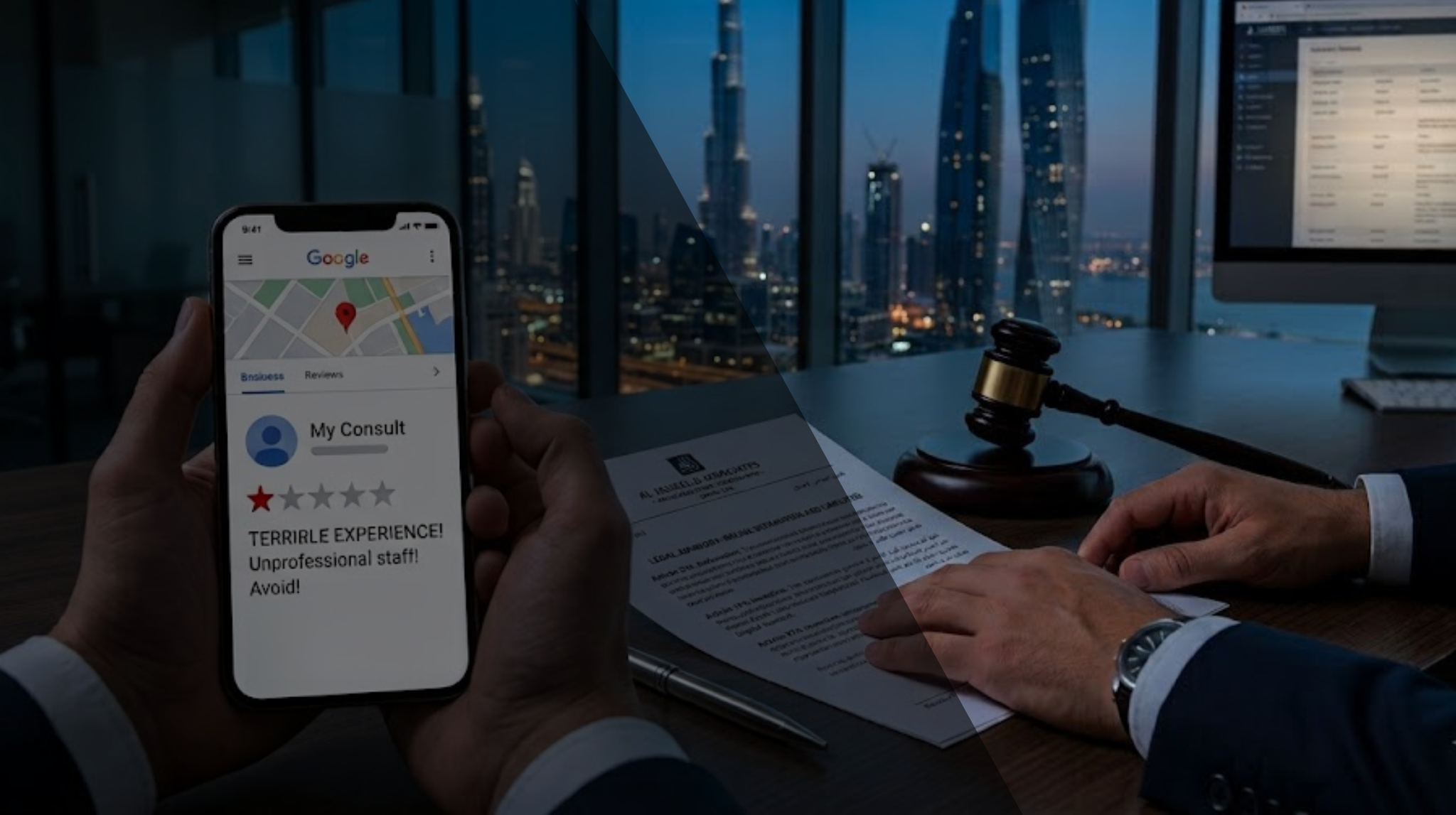
Online reviews have become an important part of how customers evaluate businesses in the UAE. While customers generally have the right to share their experiences and opinions, publishing false, defamatory, insulting, or harmful statements online may create legal consequences. A negative Google review does not automatically result in legal action. However, depending on the content of the review, the circumstances in which it was published, and whether it contains false or offensive allegations, a business or individual may have legal options under UAE law.
Understanding the difference between a genuine customer complaint and potentially unlawful online content can help individuals and businesses protect their rights.
1. Can a Bad Google Review Lead to Legal Action in the UAE?
A negative Google review may potentially lead to legal action if its content goes beyond a genuine expression of dissatisfaction and violates applicable UAE laws.
For example, legal concerns may arise where a review contains:
• False allegations presented as facts.
• Defamatory statements that harm a person's or company's reputation.
• Insults or offensive language directed at an individual.
• Accusations of criminal or unethical conduct without a factual basis.
• Personal or confidential information published without authorization.
• Statements made with the intention of damaging another person's reputation or business.
However, simply giving a negative opinion about a service does not necessarily mean that the reviewer has committed an offence.
2. What Is the Difference Between a Negative Review and Defamation?
Not every negative review is defamatory. Customers may generally express genuine dissatisfaction with a product or service, provided that their comments do not unlawfully harm another person's reputation or contain prohibited content.
For example, statements such as:
• "The service was disappointing."
• "I was unhappy with the customer service."
• "The delivery took much longer than expected." may generally be understood as expressions of personal experience or opinion.
However, making serious factual accusations without a proper basis may create legal risks.
Examples may include:
• Accusing a business owner of committing fraud without evidence.
• Claiming that an employee stole money when there is no factual basis.
• Publishing false allegations about criminal conduct.
• Making statements intended to seriously damage a person's professional reputation.
The exact wording, context, evidence, and circumstances of the publication are important when determining whether a review may have legal consequences.
3. Can a Business Take Legal Action Against a False Google Review?
Depending on the circumstances, a business or individual who believes that a Google review is unlawful may consider taking legal action.
Possible steps may include:
• Preserving screenshots and copies of the review.
• Identifying the person who published the content where legally possible.
• Reporting the review through Google's available procedures.
• Sending a formal legal notice requesting removal or correction.
• Filing a complaint with the competent UAE authorities where appropriate.
• Pursuing legal proceedings where the circumstances justify such action.
The appropriate procedure depends on the nature of the statements and the evidence available.
4. What Types of Google Reviews May Create Legal Problems?
Certain types of online reviews may create greater legal risks than ordinary complaints.
These may include:
False Accusations
Publishing allegations that are knowingly false or unsupported may potentially expose the reviewer to legal consequences, particularly where the statements harm another person's reputation.
Insults or Offensive Statements
Using insulting, abusive, or degrading language against a person may create legal concerns depending on the content and circumstances.
Criminal Accusations
Accusing a person or company of crimes such as fraud, theft, or other unlawful conduct without a proper factual basis can be particularly serious.
Disclosure of Private Information
Publishing someone's personal information, photographs, contact details, or other private information without lawful justification may raise additional legal issues.
Intentional Reputation Damage
Reviews published with the apparent purpose of damaging a person's professional reputation or a company's business may receive greater legal scrutiny depending on the circumstances.
5. Can a Customer Be Sued Just for Giving a Negative Review?
A customer is not automatically liable simply because they post a negative review. A genuine complaint based on a customer's actual experience may be different from publishing false or offensive allegations.
For example, a customer who explains that:
• A service was delayed.
• A product did not meet expectations.
• Customer service was unsatisfactory.
• The customer experienced a problem with a transaction. may be expressing a genuine experience.
However, the situation may become more serious if the review contains false allegations, insults, threats, or other prohibited content. Therefore, the legal assessment depends on the actual wording of the review rather than simply whether the review is positive or negative.
6. What Should a Business Do After Receiving a Harmful Google Review?
Businesses should avoid responding emotionally or making additional accusations against the reviewer.
Instead, they should consider taking the following steps:
• Save screenshots of the review, including the reviewer's name and date.
• Preserve any relevant customer records, invoices, contracts, or communications.
• Determine whether the review relates to a genuine customer transaction.
• Assess whether the statements are factual, opinion-based, defamatory, or offensive.
• Report content that may violate Google's policies.
• Consider sending a formal legal notice where appropriate.
• Seek legal advice before initiating legal proceedings.
Maintaining evidence is particularly important because online content can later be edited or deleted.
7. Can a Google Review Be Removed?
A business may request the removal of a review if it believes the content violates Google's policies. However, a business does not automatically have the right to remove a review simply because it is negative. Reviews that reflect genuine customer experiences may remain online even if the business disagrees with them. Where a review contains potentially unlawful material, the business may also consider available legal procedures in addition to Google's reporting mechanisms. The appropriate approach depends on the content of the review and the circumstances surrounding its publication.
8. What Evidence Is Important in a Google Review Dispute?
Evidence can be important when assessing whether a review may justify legal action.
Relevant evidence may include:
• A screenshot or copy of the complete review.
• The reviewer's profile information, where available.
• The date and time of publication.
• Previous communications with the reviewer.
• Invoices, receipts, contracts, or transaction records.
• WhatsApp messages, emails, or other communications.
• CCTV or other relevant records, where legally obtained and applicable.
• Evidence showing that statements made in the review are false or misleading.
Businesses should preserve the original evidence before responding to or reporting the review.
9. What Legal Remedies May Be Available?
Depending on the facts of the case, different legal or administrative options may be available.
These may include:
• Requesting removal of the review through the platform.
• Sending a formal notice to the person responsible, where identifiable.
• Filing a complaint with the competent authorities.
• Pursuing a criminal complaint where the content may constitute an offence.
• Seeking appropriate civil remedies where legally available.
• Taking steps to protect the reputation and business interests of the affected person or company. The appropriate remedy depends on the nature of the statements, the available evidence, and the applicable UAE laws.
10. What Should You Do If You Are Accused Through a Google Review?
If a person or business has been accused of misconduct or unlawful activity through a Google review,
it is important to respond carefully.
The affected party should consider:
• Preserving a copy of the review.
• Determining whether the allegations are factually accurate.
• Collecting documents that contradict false allegations.
• Avoiding aggressive or potentially defamatory responses.
• Reporting the content through the appropriate platform procedures.
• Obtaining legal advice if the publication has caused significant reputational or financial harm.
A carefully considered response can help prevent the dispute from escalating.
11. Can Legal Assistance Help with Google Review Disputes?
Online reputation disputes can involve both digital platform procedures and UAE legal requirements. A legal professional can review the content of a disputed review and assess whether the statements may create legal concerns.
Legal assistance may include:
• Reviewing the Google review and related communications.
• Assessing whether the statements may be defamatory, insulting, or otherwise unlawful.
• Reviewing available evidence.
• Advising on possible legal remedies.
• Assisting with formal notices or complaints where appropriate.
• Advising businesses on how to respond without creating additional legal risks.
The appropriate course of action depends on the specific facts and circumstances of each case.
Key Takeaway
A bad Google review does not automatically mean that the reviewer can be sued or prosecuted in the UAE. Customers may express genuine dissatisfaction with products or services, but online statements that contain false allegations, insults, threats, or other potentially unlawful content may create legal consequences. Businesses and individuals who believe they have been unfairly targeted should preserve evidence, carefully assess the content, and consider the appropriate legal and platform-based remedies.
Conclusion
Google reviews can have a significant impact on an individual's or business's reputation. While customers should be able to share genuine experiences, online freedom does not necessarily protect statements that violate UAE laws. Whether a particular Google review can lead to legal action depends on its wording, factual basis, context, and the harm caused. A careful review of the circumstances and available evidence is therefore essential before taking legal action. If you have received a false, defamatory, or offensive Google review in the UAE and believe it is damaging your reputation or business, seeking professional legal advice can help you understand your rights and determine the most appropriate course of action.