Sharing accommodation is common in Dubai, particularly among residents looking for more affordable housing. However, renting or sharing part of an apartment is not simply a private arrangement between tenants. Depending on the circumstances, Dubai tenancy and housing regulations may impose requirements on tenants, landlords, and occupants.
Recent changes and increased enforcement have made it particularly important for residents to understand whether an apartment can legally be shared, whether additional occupants may stay in the property, and what consequences may arise from unauthorised arrangements.
1. Is Sharing an Apartment in Dubai Legal?
Sharing an apartment is not automatically unlawful. However, the legality of the arrangement depends on the circumstances, including the tenancy contract, the landlord's consent, the number of occupants, the type of accommodation, and applicable housing and tenancy regulations.
A tenant should not assume that being the lawful tenant of an apartment automatically gives them the right to rent out rooms or allow additional people to occupy the property.
Where an arrangement involves subletting, additional occupants, partitioned rooms, or overcrowding, specific legal and regulatory requirements may apply.
2. Can a Tenant Rent Out a Room in a Rented Apartment?
A tenant generally cannot freely sublet part or all of a rented property without complying with the applicable tenancy requirements.
The tenancy contract should first be reviewed to determine whether subletting or additional occupancy is permitted. In circumstances where the landlord's approval is required, obtaining consent before allowing another person to occupy the property is particularly important.
A tenant who allows another person to live in the property without the required authorisation may potentially face consequences under the tenancy agreement and applicable Dubai regulations.
3. What Is the Difference Between Sharing and Subletting?
Not every person staying in an apartment necessarily becomes a subtenant.
The legal position may depend on the nature of the arrangement.
For example, there may be a difference between:
• A family member living with the tenant.
• A friend temporarily staying with the tenant.
• A person regularly occupying a room and paying rent.
• A tenant renting out a room to another individual.
• Multiple unrelated individuals occupying partitioned spaces.
• A person operating the property as shared accommodation for financial gain.
Where money is paid in exchange for accommodation, the arrangement may raise additional legal questions and should not be treated simply as an informal sharing arrangement.
4. Is the Landlord's Permission Important?
Yes. The terms of the tenancy agreement are important when determining whether another person may occupy the property.
A tenant should carefully review the tenancy contract before allowing another person to move into the apartment or before accepting payment for accommodation.
Where landlord consent is required, obtaining that consent in writing can help avoid future disputes.
An unauthorised arrangement may create problems involving the landlord, the tenant's tenancy contract, and the authorities responsible for regulating residential accommodation.
5. What About Partitioned Rooms or Unauthorised Divisions?
Sharing an apartment becomes more legally sensitive where rooms or common areas have been divided into multiple spaces to accommodate additional occupants.
Unauthorised partitions may raise safety, occupancy, building-management, and regulatory concerns. The fact that a particular arrangement is common in practice does not necessarily mean that it is legally permitted.
Residents should therefore be cautious before moving into an apartment where bedrooms, living rooms, balconies, or other areas have been converted into separate accommodation spaces without appropriate approval.
6. Can Overcrowding Create Legal Problems?
Yes. Residential properties are subject to occupancy and health and safety requirements.
An apartment occupied by an excessive number of people may create concerns relating to overcrowding, sanitation, fire safety, building regulations, and the permitted use of the property.
This means that even where several occupants have agreed privately to share rent, the arrangement may still create legal or regulatory issues if it results in prohibited overcrowding or unsafe living conditions.
7. What Are the Risks of Unauthorised Apartment Sharing?
Depending on the circumstances, unauthorised sharing or subletting may result in several consequences.
These may include:
• Disputes with the landlord.
• Breach of the tenancy contract.
• Requests to vacate the property.
• Administrative or regulatory action.
• Issues involving building management or the relevant authorities.
• Potential financial liability arising from the arrangement.
• Disputes concerning deposits, rent, or payments made by occupants.
The consequences will depend on the facts of each case and the specific rules applicable to the property.
8. What Should a Tenant Do Before Sharing an Apartment?
Before allowing another person to occupy a rented apartment, a tenant should consider the following:
• Review the tenancy agreement carefully.
• Check whether subletting or additional occupancy is permitted.
• Obtain the landlord's written consent where required.
• Confirm that the proposed arrangement complies with applicable Dubai regulations.
• Avoid unauthorised partitions or alterations.
• Ensure that the number of occupants does not create overcrowding or safety concerns.
• Keep written records of any agreement concerning rent and occupancy.
• Confirm that the accommodation arrangement is consistent with the property's permitted residential use.
Taking these steps can help prevent disputes and potential legal complications.
9. What If You Are Already Sharing an Apartment?
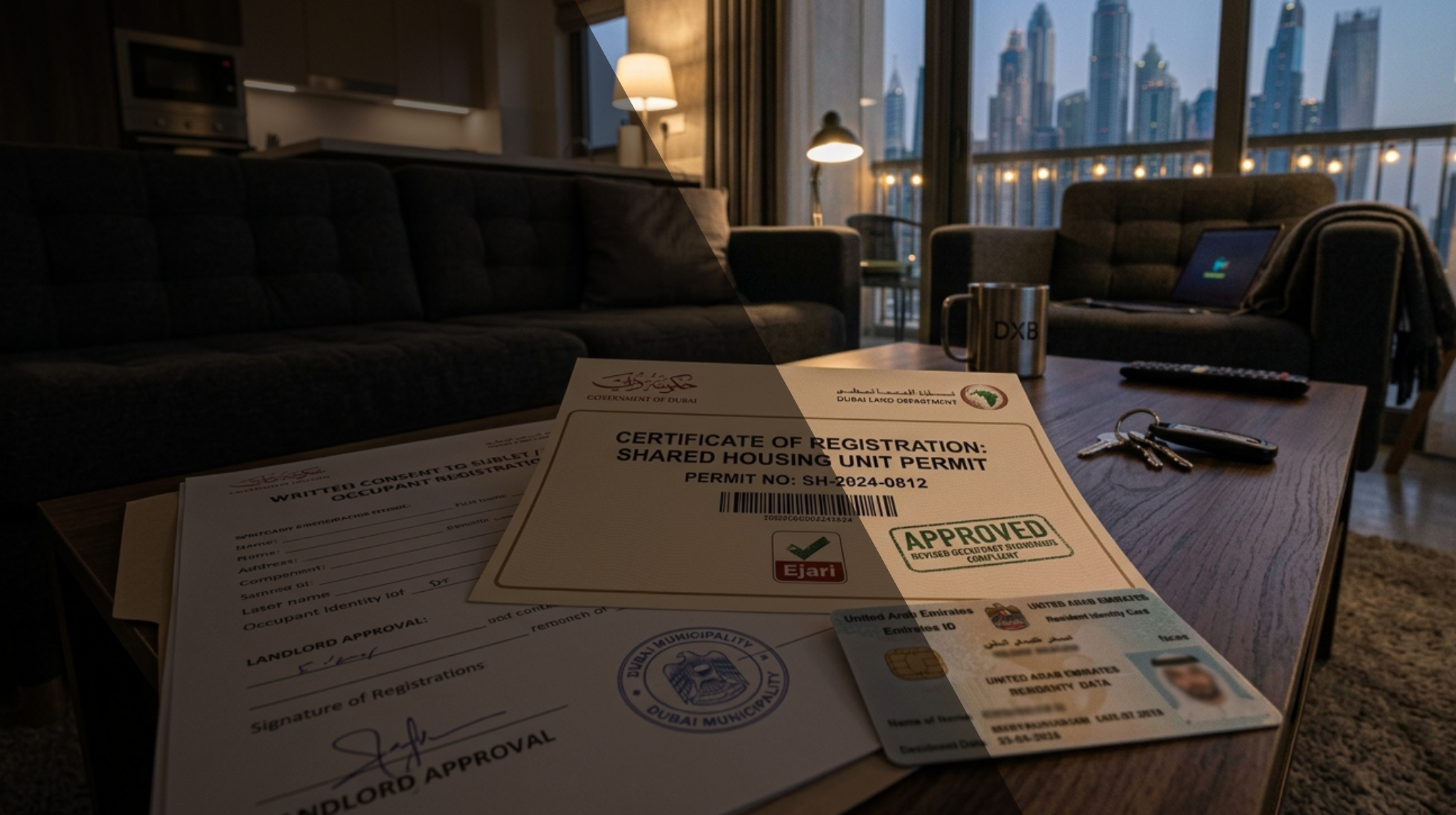
If you are already living in shared accommodation, it is advisable to determine whether the arrangement is authorised and compliant.
Important documents may include:
• The tenancy contract.
• Any written consent from the landlord.
• Ejari documentation, where applicable.
• Receipts or records of rent payments.
• Written agreements between occupants.
• Communications concerning the occupancy arrangement.
• Documents relating to the property or building management.
If there is a dispute with the landlord, tenant, or other occupants, these documents may be important in determining the parties' respective rights and obligations.
10. Can a Tenant Be Evicted for Unauthorised Sharing?
Potentially, depending on the circumstances.
A landlord may have legal grounds to take action where a tenant breaches the tenancy agreement or applicable tenancy regulations. Whether eviction is justified, however, depends on the specific facts, the nature of the alleged violation, the tenancy contract, and the applicable legal procedure.
A tenant should therefore not assume that an eviction threat is automatically valid, nor should a landlord assume that eviction can take place without following the required legal process.
11. What Should a Landlord Do If a Tenant Is Illegally Sharing the Property?
A landlord who discovers unauthorised sharing or subletting should first document the situation and review the tenancy agreement.
Depending on the circumstances, the landlord may consider:
• Requesting clarification from the tenant.
• Reviewing the tenancy and Ejari records.
• Documenting evidence of unauthorised occupancy.
• Issuing the appropriate formal notice where legally required.
• Contacting the relevant authorities or property management.
• Pursuing the appropriate legal proceedings where necessary.
The landlord should avoid taking self-help measures that may themselves create legal problems.
12. What Should an Occupant Do If They Are Paying for an Unauthorised Room?
A person who is paying rent for a room or shared accommodation should also understand the legal status of the arrangement.
Before making substantial payments, the occupant should consider asking:
• Is the person offering the room actually entitled to rent it out?
• Does the landlord know about the arrangement?
• Is there a valid tenancy arrangement?
• Is the property being used for permitted residential purposes?
• Are the living conditions safe and compliant?
• Are there restrictions on the number of occupants?
These questions can help reduce the risk of losing money or becoming involved in a tenancy dispute.
13. Can a Tenant Sublet Without the Landlord Knowing?
A tenant should not assume that an informal agreement with another occupant is sufficient.
Where the tenancy contract or applicable regulations require the landlord's approval, subletting without that approval may expose the tenant to legal and contractual consequences.
The absence of an immediate complaint from the landlord does not necessarily mean that an arrangement is legally authorised.
14. What Evidence Is Important in a Sharing-Apartment Dispute?
Evidence can be important when determining whether an apartment-sharing arrangement complies with the applicable rules.
Relevant evidence may include:
• The original tenancy agreement.
• Ejari documentation.
• Written landlord consent.
• Rental payment records.
• Bank transfers or receipts.
• WhatsApp messages and emails.
• Photographs of the property and any partitions.
• Records showing the number of occupants.
• Building-management communications.
• Notices issued by the landlord or relevant authorities.
Preserving the original documents and communications can be particularly important if a dispute later develops.
15. What Legal Options Are Available in a Dispute?
The appropriate legal remedy depends on the nature of the dispute.
Depending on the circumstances, parties may need to consider:
• Negotiation between the landlord and tenant.
• Formal legal notices.
• Proceedings before the competent rental dispute authority.
• Complaints to the relevant regulatory authorities.
• Claims relating to rent, deposits, or other financial losses.
• Legal action concerning contractual or regulatory violations.
A legal professional can review the tenancy documents and circumstances and advise on the appropriate procedure.
Key Takeaway
Sharing an apartment in Dubai is not automatically illegal, but residents should not assume that every form of shared accommodation, subletting, or room rental is permitted.
The legality of an arrangement may depend on the tenancy contract, landlord consent, occupancy requirements, property regulations, and the manner in which the accommodation is being used. Unauthorised subletting, overcrowding, or unlawful alterations to a residential property may expose tenants and landlords to legal or regulatory consequences.
Before entering into a shared accommodation arrangement, it is advisable to verify that the arrangement is properly authorised and complies with applicable UAE and Dubai regulations.
Conclusion
Apartment sharing can provide an affordable housing solution in Dubai, but informal arrangements may create significant legal and contractual risks when the required permissions or regulatory requirements are not observed.
Tenants should carefully review their tenancy agreements and obtain the necessary approvals before allowing additional occupants or renting out part of a property. Landlords should likewise use the proper legal procedures when addressing unauthorised occupancy or subletting.
If you are involved in a dispute concerning apartment sharing, subletting, overcrowding, or unauthorised occupancy in Dubai, obtaining professional legal advice can help clarify your rights and identify the appropriate legal steps available under UAE law.